Business Waste Removal Richmond upon Thames — Recycling & Sustainability
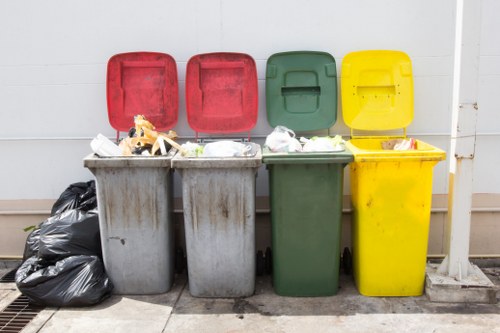
The work we do in the borough is driven by a simple aim: to make eco-friendly waste disposal area practices the norm for every commercial and civic space. Our commercial waste collection Richmond teams partner with local businesses, estates and community groups to ensure that commercial rubbish is handled with an emphasis on reuse, recycling and low carbon transport. Business Waste Removal Richmond upon Thames focuses on measurable outcomes and continuous improvement to build a genuinely sustainable rubbish area across the borough.The Richmond upon Thames approach to waste separation is part of the local fabric: households and businesses are encouraged to separate food waste, mixed dry recycling, glass, and garden waste to increase diversion from landfill. In the same way, our business collections reflect the boroughs approach to waste separation by offering dedicated streams for paper and cardboard, clean plastics, metals, food waste and confidential shredding. We work with property managers to set up appropriate bins and signage so that business waste removal in Richmond upon Thames aligns with council schemes and reduces contamination.
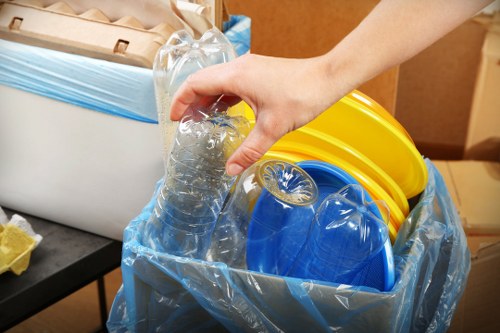 Our sustainability strategy includes a clear recycling percentage target: we aim to achieve a 70% recycling and reuse rate for commercial waste by 2030. This target covers materials redirected to reuse routes, material recovery through mechanical sorting, and organic processing. To reach the 70% target we maintain a clear route map with milestones, periodic waste audits and dedicated training for clients so that each site becomes part of the borough-wide transition to a greener, sustainable rubbish area.
- Short-term target: 55% recycling by 2026
- Medium-term target: 65% recycling by 2028
- Long-term target: 70% reuse/recycling by 2030
To keep the logistics low carbon and efficient we use route-optimised schedules and invest in low-emission vehicles. Our fleet includes electric vans, plug-in hybrids and the latest Euro 6 vehicles designed for reduced particulate and NOx emissions. Low-carbon vans are central to lowering Scope 1 emissions from collections; we also use cargo bikes and consolidated loads where street access or congestion demands smaller, cleaner delivery models.
 Partnerships with charities are a cornerstone of creating an eco-friendly waste disposal area. We work with local reuse charities and community groups to divert good-quality furniture, textiles and office equipment from the waste stream. Partnerships include coordinated donation drives with community reuse organisations and national charities, enabling items to be refurbished and redistributed rather than destroyed. Examples include collaboration with local reuse centres, employment-focused charities and community furniture projects to transform commercial clearances into social value.
We also manage collections to local transfer stations and recycling hubs that serve West and Southwest London, ensuring efficient onward processing. Local transfer stations we routinely use include West London transfer facilities and nearby borough-operated hubs that accept segregated loads for onward recycling and energy recovery. Consolidating loads at nearby transfer points reduces mileage and speeds processing into authorised material recovery facilities and anaerobic digestion plants for food and green waste.
Practical recycling activity in the borough
Our teams are familiar with Richmond upon Thames' practical recycling activities — such as kerbside food waste collection pilots, communal glass and textile banks, and the borough’s focus on reducing contamination in mixed recycling. For businesses this means tailored services: on-site segregation audits, labelled bin systems, and internal communication materials that match borough guidance. We translate local policies into practical steps so businesses can participate in the borough’s ambitions without disrupting day-to-day operations. We monitor progress through regular reporting and transparent audits. Each client receives clear metrics on diversion rates, carbon savings from low-carbon vans, and the proportion of materials sent for reuse versus recycling versus energy recovery. Reporting supports continuous improvement: monthly or quarterly summaries inform where additional training or bin adjustments will lift recycling percentages. Our sustainability advisors also run targeted projects to reduce single-use items and encourage circular purchasing policies in workplaces.